| Country of Origin: | England |
| Registries: | UKC, CKC, UKC, NKC, APRI, ACR, DRA |
| Breed Group: | UKC: Herding Dog Breeds |
| Occupation: | Herding-Working dog |
| Size: | Length: 46 – 58 cm (18 – 23 inches) Weight: 18 – 23 kg (40 – 50 lbs ) |
| Longevity; | 12 -16 years |
| Exercise: | Daily walks, big yards romps or runs in the field |
| Training: | Dog agility trials, obedience, showmanship, flyball, tracking, and herding events |
| Grooming: | Easy |
| Colors: | Sable and white (clear and shaded), tricolor, black and white, and black and tan |

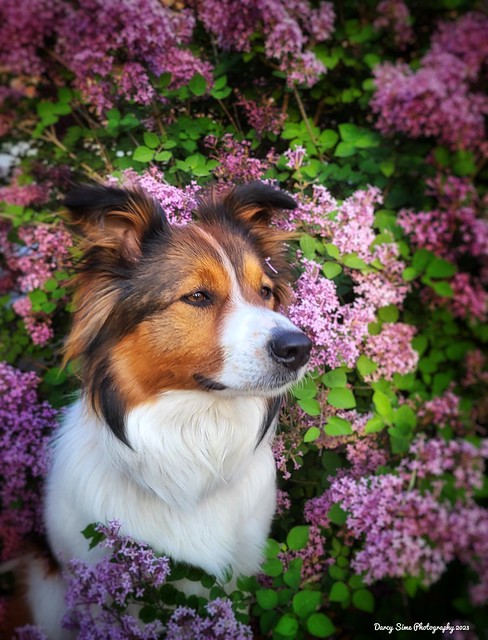
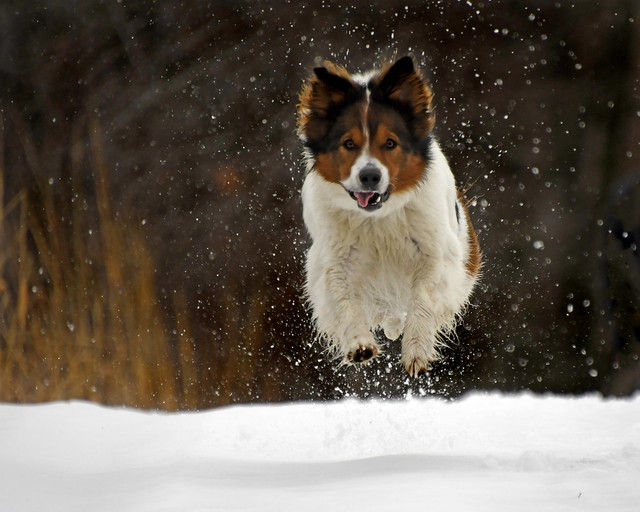


This dog breed originates from the northern England and Scotland. As a matter of fact, this dog breed came with the first setters. American farmers found them as a very versatile dog breed and started using them to protect their farms and livestock. English Shepherds were known as Scotch Collie. Nowadays these dogs are a rare breed.
English Shepherds are very similar in their appearance to Border Collies as well as Australian Shepherds. From the other side, English Shepherds normally have tails and less rounded heads than many Australian Shepherds. They are also not square in body like Aussie’s. English Shepherds are generally larger than Border Collies.
The English Shepherd is a medium sized dog. Normally, it is longer than it is tall. It weighs between 20 to 30 kilograms. The coat is medium length and can be either straight, wavy, or curly. On the tail and legs there is frequently feathering, as well as on his ears. Since this is a working dog, his hair requires very little grooming, and the dirt just tends falling away. From the other side, this dog breed tends to shed quite a lot. The main fur colors are sable and white, tricolor, black and tan and black and white.
The English Shepherds are very intelligent dogs. These dogs are independent workers, they are very adaptable and able to learn routines very quickly. They can be watchful of strangers and are more one-person dogs but once they accept people or children or stock as their own, there are no better caretakers than an English Shepherd.
These dogs require a lot of exercise and can become very destructive if not provided enough. They have a natural instinct to chase, but from the other side they also tend to become calm and relaxed at the end of the day.
English Shepherds are generally healthy dogs. However, some recent researches proved that approximately 15% of the English Shepherd population is subject to the MDR1 gene mutation, and a very simple cheek swab is everything needed to test whether the dog has this potentially life-threatening condition.