| Country of origin: | Great Britain |
| Registries: | AKC, UKC, CKC |
| Occupation: | Hunter |
| Size: | 22 to 24.5 in tall; 60 to 75 lbs |
| Longevity: | 12 to 14 years |
| Exercise: | Active |
| Training: | Easy; loves dog sports |
| Grooming: | Moderate |
| Colors: | Liver, black |


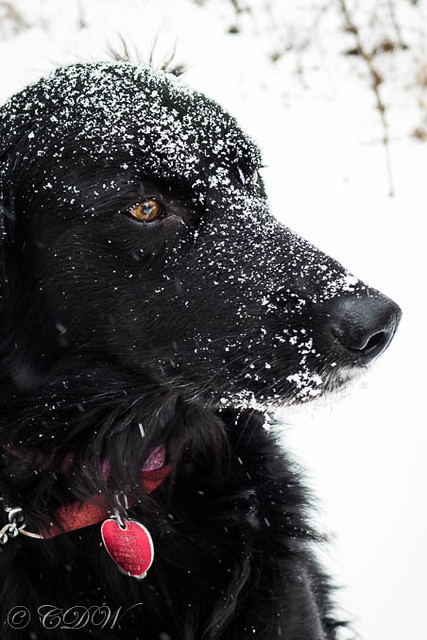


This amiable, gregarious breed was created in the 19th century from crosses including Newfoundlands and setters. It excels as a flushing and retrieving gundog. It was popular at the turn of the 20th century, but was then overshadowed by the Golden and Labrador Retrievers and had almost become extinct by the end of World War II. Today, it has regained its popularity not only as a versatile working dog, but also as a gentle but high-spirited companion and superb, handsome family dog.
Breed name synonyms: Flattie
HISTORY
During the early 19th century, wildfowling and waterfowling, became very popular in Great Britain. In response to their increasing popularity, a new type of retrieving dog – the Flat-Coated Retriever was developed. It is believed that his ancestors include Newfoundland dogs, Spaniels, Setters, Pointers and Sheepdog type of dogs. Unfortunately the early phases of development and history of the Flatties are not documented and therefore many details are speculated. The first written record about this breed is in Vero Shaw’s ‘’Illustrated book of the dog’’ published in 1881.
Facing extinction by the end of WWII, today the Flat-Coated Retriever’s popularity is on the rise. He is considered a capable sports dog and loving companion.
PERSONALITY
When described on paper, the personality of the Flat-Coated Retriever, looks like a glowing recommendation letter. Often referred as ‘’eternal puppy’’, the Flatty is good- natured, loving, sensible, intelligent, multitalented, eager to please, easy to deal and cheerful.
Constantly wagging its tail, the Flatty is a people-oriented type of dog. He is lighthearted and affectionate towards family members and gentle and patient with small children. Although on the field Flat-Coated Retrievers are excellent hunters on both, land and water, when at home they turn into the perfect cuddling lapdogs. As hunters, they are alert, agile, confident and extremely capable trackers. They are very active and willing to work.
Flatties are friendly and get along well with other dogs and if raised together with other pets, as well.
TRAITS
Flat-Coated Retrievers have the classical athletic and fit-looking appearance, common for members of the Retrievers Family. They are strong and elegant with bodies slightly longer than tall. The dark brown or hazel eyes are wide-set, medium-sized and almond-shaped.
The weather-resistant and waterproof double coat is lustrous and of medium density and length. Usually it is straight and lies flat, but sometimes it can be slightly wavy. It has well developed featherings on the ears, chest, tail, thighs and the back of the forelegs. The coat in males is heavier around the neck. Accepted coat colors include black, liver and reddish-brown.
Male Flat-Coated Retrievers should ideally stand 23-24.5’’ (58.5-62cm) at the withers and females should stand 22-23.5’’ (56-59.5cm). They weigh approximately 60-80Ib (27-36.5kg).
HANDLING
Because of the Flattie’s extended mental puppyhood and immature character, he can be a real challenge for first time owners. He reaches emotional maturity either slowly or never and therefore he is often described as the ‘’canine Peter Pan’’.
Flat-Coated Retrievers are willful and love testing the boundaries. Since discipline and harsh methods always backfire, they must be handled with patience, affection and lots of treats. They get bored easily and training sessions must be short and entertaining. Owners must find a way to channel their Flatty’s energy in positive direction.
Flat-Coated Retrievers are highly prone to separation anxiety and separation related behaviors such as chewing, digging and other demolishing activities. It must be kept in mind that this breed is very creative in its destruction.
HEALTH
Flat-Coated Retrievers have several health related issues. The number one cause of death in the breed is cancer. Few types of cancers are common, including hemangiosarcoma, osteosarcoma, mast-cell cancer, lymphosarcoma and lymphoma, malignant histiocytosis, melanoma, fibrosarcoma and adenocarcinoma.
On the bright side, compared with other medium to large-sized breeds, the incidence of hip dysplasia and luxating patellas in Flatties is very low. Flat-Coated Retrievers are prone to several eye conditions (glaucoma, entropion, distichiasis and progressive retinal atrophy), epilepsy and diabetes.
The average lifespan of the Flat-Coated Retriever is estimated to be 12-14 years.