Komondor

Country of origin: Hungary
Registries: AKC, UKC, CKC
Occupation: Livestock
guardian
Size: Females: 25.5+ in; 75 to
85 lbs
Males: 27.5+ in; 100 lbs
Longevity: 10 to 12 years
Exercise: Moderate
Training: Moderate
Grooming: Corded coat;
difficult
Colors: White

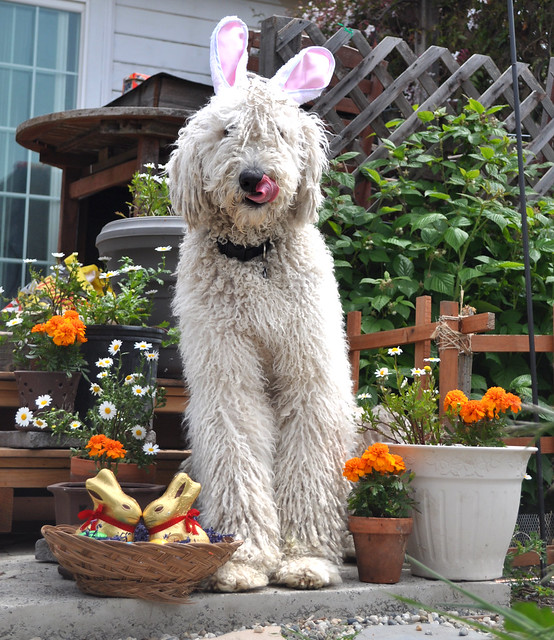
The largest and most unique of the Hungarian guarding breeds, the ancestors of the Komondor probably accompanied the Magyar tribe from the East when they settled in Europe over 1,000 years ago. The breed’s name was first used almost 500 years ago, although it was not until 1910 that the Komondor was firmly established as a modern breed. While its coat is now admired for its unusual appearance, it evolved for practical reasons, for protection from the elements and from the teeth and claws of wolves and bears as it protected its flock. The Komondor’s guarding abilities led to its establishment in North America to protect sheep from Coyote predation. Pups are raised with sheep, move pasture with the flock, and, as adults, are even shorn when the flock is shorn. So effective is the breed at thwarting Coyote attacks on sheep, some ranches in British Columbia have eliminated livestock loss. The coat of the working Komondor is thick and protective, but it does not develop into a show-quality coat as illustrated here. This protective breed needs careful obedience training, but with early socializing, it makes a reasonable, if sometimes musty-odoured, companion.

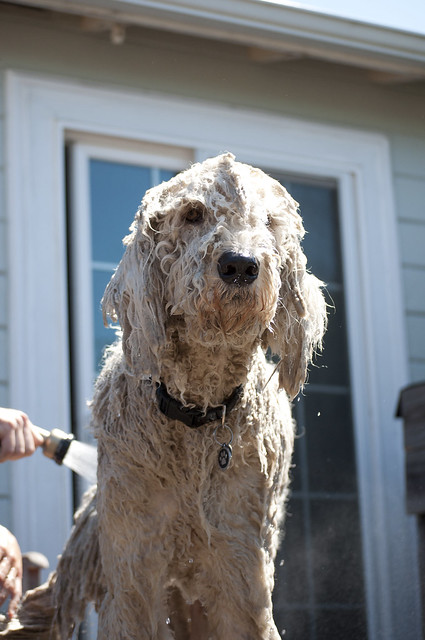
While this magnificently corded coat is wonderful to behold, it can create problems for the owner and also for the dog. Outdoors it acts like a magnet, picking up twigs, leaves, debris, and even insects. A wet coat can take almost a day to completely dry out. Komondors should only be bathed when medically necessary, and then thoroughly dried using a hand-held drier.

Advertisement

spot_img

Popular Questions

Can Dogs Eat Grass? Understanding the Safety and Reasons

As dog owners, we often find ourselves pondering our furry friends' peculiar behaviors. One such behavior is grass eating. Can dogs eat grass? Is...

Why Does My Dog Have Bad Breath? Understanding Halitosis

Bad breath, also known as halitosis, is a common issue among dogs. While it may seem like a minor concern, persistent bad breath in...

What is a Hotspot on a Dog? A Comprehensive Guide to Canine Hotspots

As dog owners, our primary concern is always the well-being of our furry companions. One common health issue that many dogs face is the...

Are Dogs Allergic to Gluten? A Comprehensive Look into Canine Nutrition

The gluten-free trend has become increasingly popular among humans as more people are diagnosed with gluten sensitivities or celiac disease. However, pet owners may...

Fever in dogs

Fever also known as pyrexia is defined as a higher than a normal body temperature. This normal body temperature is common to all animals...

Poisoning in dogs

Dogs by nature are inquisitive and curious. A great habit it is, when you are taking your dog out to walk. However, it works...

Hair loss in dogs

Alopecia or hair loss is common to dogs and may vary from partial to complete hair loss. It may occur gradually or may happen...

Bloat (gastric torsion) in Dogs – Symptoms, Treatment, Prevention

Bloat, also referred to as gastric dilation volvulus (GDV) and gastric torsion, is a condition in which a dog’s stomach becomes distended, twists, or...

Diabetes in Dogs

Diabetes is a common disease in humans and is common enough in dogs too, so much so that about 1 in 500 dogs suffer...

Patellar Luxation in Dogs: Causes, Symptoms, and Treatment Options

Patellar luxation, also known as a dislocated kneecap, is a common orthopedic issue in dogs. This condition can cause discomfort, lameness, and may even...

Hip Dysplasia in Dogs: Causes, Symptoms, and Treatment Options

Hip dysplasia is a common skeletal condition affecting dogs, especially large and giant breeds. It occurs when the hip joint doesn't develop properly, resulting...

Developmental Growth Disorders in Puppies

If your puppy is of a large or giant breed (those breeds that would weigh 55 pounds or more when fully grown), you should...

Brachycephalic Breeds

Brachycephalic dogs are those affected by brachycephalic respiratory syndrome. In Greek, “brachy” means “shortened” and “cephalic” means “head”. The shortened head of a dog...
Previous article
Next article