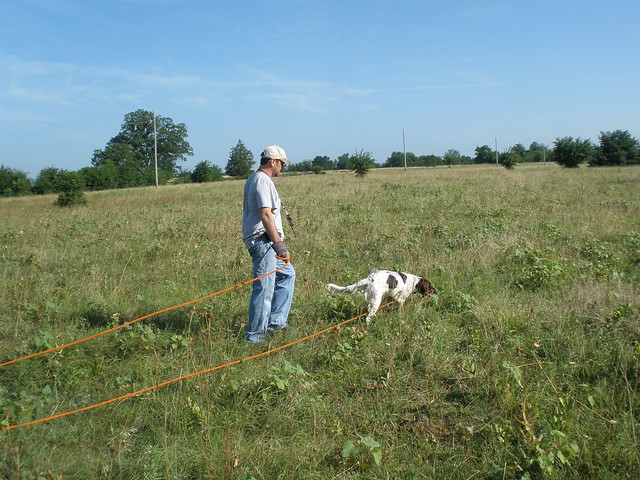
Small Munsterlander

Country of origin: Germany
Registries: AKC FSS, UKC
Occupation: Hunter
Size: 14.5–15.5kg (32–34lb),
47–55cm (19–22in)
Longevity: 11 to 13 years
Exercise: Active
Training: Moderate
Grooming: Easy to moderate
Colors: Brown and white

This engaging and intelligent breed was originally used centuries ago to flush birds for nets and hawks. The role earned it one of its other German names, Heidewachtel, or “heath quail” dog. It is also classified under the names of Kleine Münsterländer Vorstehhund or, more succinctly, Spion. When hawking declined, the breed was used as a pointer and retriever, and later as a household companion. In the early 20th century a concerted effort was made to revive the breed, using crosses with other European gundogs to increase numbers. Today the Small Münsterländer is gaining a wider audience, and is favoured by hunters in North America, where it is listed in working rather than show registries. Alongside its natural working abilities, the companion traits that saw it through its period of unemployment are still present, and this is a happy, affectionate, lively dog that asks for nothing more than leadership and entertaining exercise.

The slightest of all gundogs, the Small Münsterländer still makes an enthusiastic and efficient hunter. It readily uses its voice when tracking game, and experienced hunters can interpret from the tone of voice what type of quarry is being tracked. The breed has an especially soft mouth when retrieving birds, as the dog shown here demonstrates.

Advertisement

spot_img

Popular Questions

Can Dogs Eat Grass? Understanding the Safety and Reasons

As dog owners, we often find ourselves pondering our furry friends' peculiar behaviors. One such behavior is grass eating. Can dogs eat grass? Is...

Why Does My Dog Have Bad Breath? Understanding Halitosis

Bad breath, also known as halitosis, is a common issue among dogs. While it may seem like a minor concern, persistent bad breath in...

What is a Hotspot on a Dog? A Comprehensive Guide to Canine Hotspots

As dog owners, our primary concern is always the well-being of our furry companions. One common health issue that many dogs face is the...

Are Dogs Allergic to Gluten? A Comprehensive Look into Canine Nutrition

The gluten-free trend has become increasingly popular among humans as more people are diagnosed with gluten sensitivities or celiac disease. However, pet owners may...

Diabetes in Dogs

Diabetes is a common disease in humans and is common enough in dogs too, so much so that about 1 in 500 dogs suffer...

Osteochondritis Dissecans: Causes, Symptoms, & Treatment

Osteochondritis dissecans (OCD) is a joint disorder that affects both humans and animals, including dogs. This condition occurs when a piece of cartilage and...

Stomach Bloating in Dogs: Causes, Symptoms, & Treatment

Stomach bloating in dogs is a common issue that can cause discomfort and, in some cases, pose serious health risks. In this article, we...

Ear Infections in Dogs: Causes, Symptoms, & Treatment

Ear infections are a common health issue in dogs and can cause significant discomfort and pain. It is essential for pet owners to be...

Patellar Luxation in Dogs: Causes, Symptoms, and Treatment Options

Patellar luxation, also known as a dislocated kneecap, is a common orthopedic issue in dogs. This condition can cause discomfort, lameness, and may even...

Elbow Dysplasia in Dogs: Diagnosing & Treating Joint Disorder

Elbow dysplasia is a common orthopedic condition affecting dogs, particularly large breeds. It can lead to chronic pain, decreased mobility, and a reduced quality...

Skin Infections in Dogs: Types, Causes, Symptoms, and Treatments

Skin infections in dogs are a common and often frustrating issue for both pets and their owners. These infections can be caused by various...

Autoimmune Disorders in Dogs: Causes, Symptoms, & Treatment

Autoimmune disorders are a group of conditions in which the immune system mistakenly attacks the body's own cells and tissues. These disorders can affect...

Eye Problems in Dogs: Causes, Symptoms, and Treatment Options

Eye problems in dogs are relatively common and can range from mild to severe. As a responsible dog owner, it is crucial to be...
Previous article
Next article