| Country of origin: | USA |
| Registries: | UKC, AHT clubs |
| Occupation: | Companion |
| Size: | Toy: 7.5 to 11 in tall; 4 to 8 lbs Mini: 11.5 to 16 in tall; 8.5 to 16 lbs |
| Longevity: | 12 to 14 years |
| Exercise: | Active dog |
| Training: | Easy |
| Grooming: | Easy |




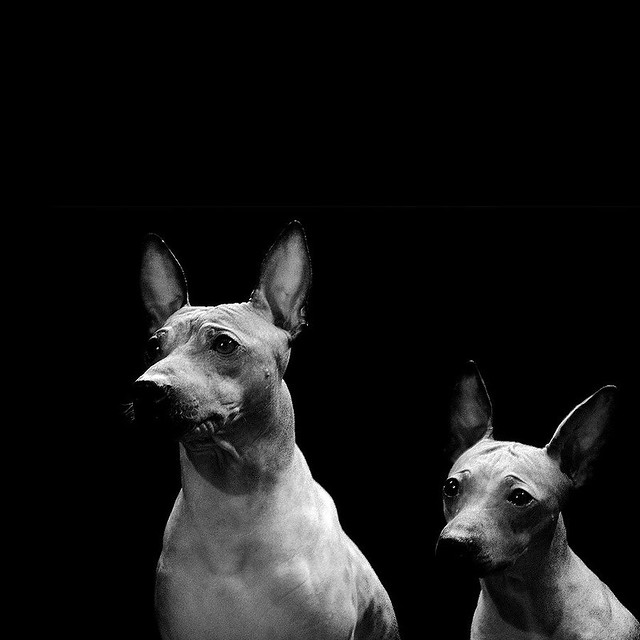


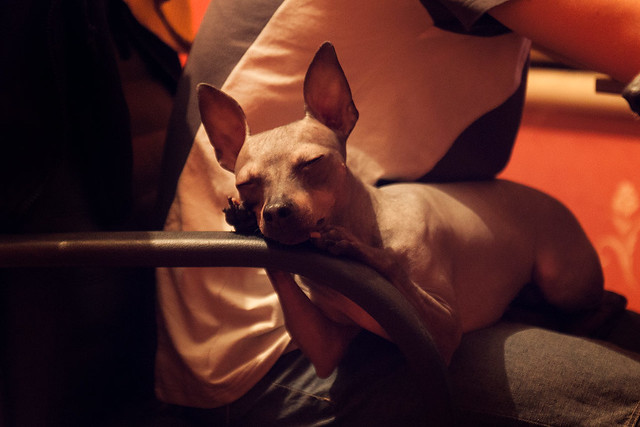

The American Hairless Terrier is a breed of dog that was formerly considered a variant of Rat Terrier. As of January 1, 2004, the United Kennel Club deemed the AHT a separate terrier breed. An intelligent, social and energetic working breed, the American Hairless Terrier is often listed as a potential good breed choice for allergy sufferers.
History
The American Hairless Terrier, also known as the AHT, are a rare breed only gaining AKC recognition in 2016. They happen to be the first hairless classification of dogs to have begun in the United States.
A very rare mutation occurred in 1972 which caused the birth of a hairless terrier in a litter of Rat Terriers. The Louisianian breeders of this unique pup offered it to their friends, the Scott family who expressed interest. They began researching and consultations with pertinent people. After visits with geneticists and vets, they were able to breed AHTs for two decades.
Since they were bred from Rat Terriers, that’s what they were registered as. It stayed that way until certain terrier registries wanted to differentiate them into two breeds.
Personality
The personality of AHTs are energetic and curious in nature. They can be feisty but playful. They are very easy to please. They get along well with children, cats, and other dogs.
Their ancestors were hunters so they have a keen sense of alertness and fearlessness. These characteristics deem them great watchdogs. They often bark frequently when faced with unfamiliarity.
Traits
The most evident trait of American hairless terriers are in their name: they simply have no hair. Although this was caused by a genetic mutation, an entire breed was born thereafter. The hairless nature make them desirable for people with allergies.
They are small dogs with a smooth and muscular body. AHTs average at about 7 to 18 inches tall and weigh about 7 to 25 lbs.
AHTs can be nearly any color or color combination imaginable. Black, blue, lemon, white combinations, and seal are just a few possibilities. The patterns on their saddles can be spotted, brindled, or patchy. Their eye colors can also be various colors like blue, brown, hazel, and so on.
Handling
The American hairless terrier is quite easy to train making the handling a more simple feat. They don’t shed so excessive grooming is typically not necessary. They do shed skin cells though.
Because they do not have a protective coat, they will need to be protected according to the weather. In colder regions, heavy layers are necessary to protect from the cold. In warmer regions, these fur-less canines can get a sunburn from their bare skin exposure. They will need clothes or sunscreen to protect from the sun’s beams.
Another advantage is that since they have no fur, fleas do not make residence on their body. Thus flea medications or preventions are not necessary. They are capable of getting skin reactions and allergies though.
Health
The American Hairless Terrier is a fairly healthy dog. Although they are susceptible to diseases that any other dog would be able to contract. One in particular is cardiac disease. Otherwise, these dogs typically don’t even suffer from dental issues and they are not a safe haven for fleas or other dermal parasites. Their lifespan is longer, averaging at about 14 to 16 years due to their healthy natures.