| Country of origin: | Great Britain |
| Registries: | AKC, UKC, CKC |
| Occupation: | Companion |
| Size: | 21 to 22 in tall; 45 to 65 lbs |
| Longevity: | 12 to 14 years |
| Exercise: | Very playful and active |
| Training: | Challenge; hard to keep focused |
| Grooming: | Easy |



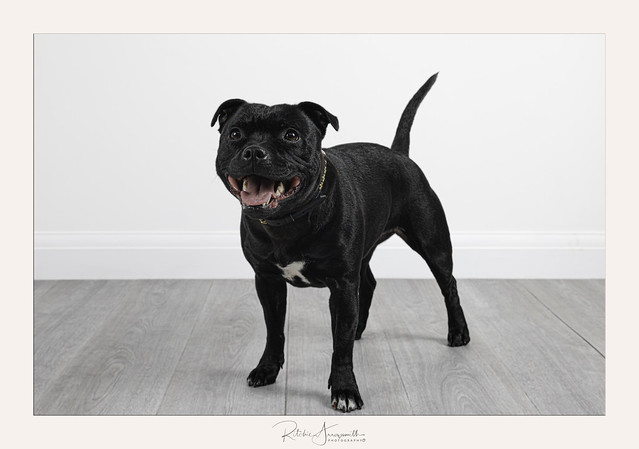


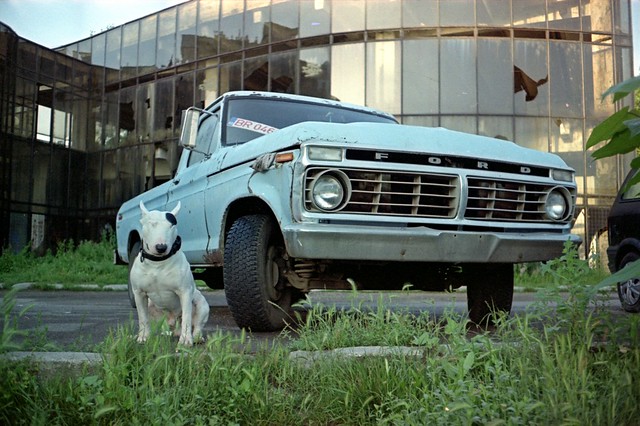
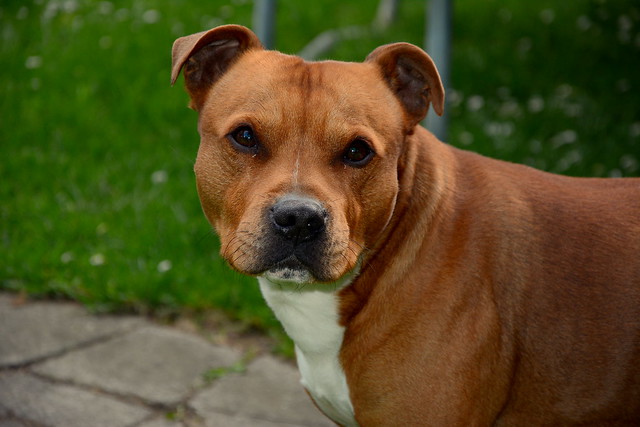


From its blunt nose to its short tail, this sturdy dog shows its pit fighter origins in every line. Developed in the early 19th century by crossing the Bulldog with the now extinct White English Terrier, it excelled in dog fights and also became a popular companion breed. John Hinks, the breed’s creator, preferred white dogs, but sadly these have a higher incidence of skin problems, deafness, and heart disease.
Dog Fights: Pit fighting, where two dogs are set against each other in a fight to the death, was a popular entertainment in the 18th and 19th centuries. Regarded as a sporting event, spectators would cheer on their chosen animal and place bets on the outcome, as shown in this 1821 illustration of a scene at the Westminster Pit, London. Banned in Britain in 1835, this cruel “sport” is illegal in most countries, but may still continue clandestinely.
Breed name synonyms: White Cavalier, English Bull Terrier, Gladiator, Bully
HISTORY
The Bull Terrier is a pit dog, originally produced in mid 1800’s Victorian England by crossing the old English Terrier and the Bulldog. The English Terrier gave the Bull Terrier his intelligence and dexterity, while the Bulldog gave him his strength and courage. Later on interbreeding other breeds such as the Spanish Pointer produced a strong, tenacious and agile dog that ruled the pits.
When dog fighting became illegal in Britain, breeders began producing strains of Bull Terriers that would win competitions rather for their looks than for their bite.
Today because of their comical expression and nature Bull Terriers are featured in countless advertising campaigns and movies such as the biography ,,Paton,, and the musical ,,Oliver,,.
PERSONALITY
Bull Terriers are feisty extroverts, always ready for a good time. The Bull Terrier is known as the ,,larger than life,, cavalier gladiator. He is a good looking rough character, full of fire and determination. As a contrast to his tough bravado, the Bull Terrier is an extremely sweet-tempered and sweet-natured, affectionate, playful, exuberant, devoted and comical and clownish breed.
Bull Terriers form strong and deep attachment with their human family. Since they were bred for fighting they will ably defend and may not get along with all dogs. They quite often consider small pets as prey.
On the downside, if not properly entertained Bull Terriers can be annoying chewers, barkers and tail chasers. They are capable of vocalizing in grumbles and groans, which are distinctive from growling.
TRAITS
The Bull Terriers are strongly built, muscular and symmetrical dogs. Their most distinctive feature is its unusual egg-shaped head and keen expression. Their bodies should be well rounded. Bull Terriers weight 52-62lb (24-28kg) and their height at withers is 21-22“ (53-56cm).
When it comes to colors, there are two varieties – White and Colored. White Bull Terriers should be white, although markings on the head are permissible. Colored Bull Terriers come in brindle, black-brindle, red, fawn and white or tricolor. The coat is short, flat and with a fine gloss, but as a result to its hard texture it is rough to the touch.
HANDLING
Bull Terriers are to be raised with consistent leadership. They are intelligent, but that does not make them easily trainable, because in the end they have a mind of their own.
Since Bull Terriers do not respond to discipline or harsh tones, the training should be done in a calm and assertive manner. It is recommended to keep the training sessions short, because these dogs have short attention spans and become bored easily.
Neglected youngsters tend to be especially rambunctious – happily devouring furniture, excavating great caverns in the yard, spinning in dizzy circles and chasing their tails obsessively.
HEALTH
The Bull Terrier is fairly healthy, but genetic health problems that have been seen in the breed include cardiovascular conditions (mitral dysplasia, aortic stenosis), dermatological conditions (nasal folliculitis and furunculosis, pododermatitis, demodicosis, ichthyosis, Waardenburg – Klein syndrome, truncal solar dermatitis, zinc responsive dermatosis, skin tumours), haematological or immunological conditions (acrodermatitis), musculoskeletal conditions (osteochondrodysplasia, congenital elbow luxation, avulsion of tibial tuberosity, hock osteochondritis dissecans), neoplastic conditions (actinic keratosis or solar keratosis, mast cell tumours), neurological conditions (congenital deafness, cerebellar malformation), ocular conditions (micropalpebral fissure, entropion, ectropion, prolapse of the gland of the nictitating membrane) and renal and urinary conditions (polycystic kidney disease, familial renal disease).
The Bull Terrier’s lifespan is estimated to be 11-13 years.