| Country of origin: | Netherlands |
| Registries: | UKC, ARBA |
| Occupation: | Versatile herding dog |
| Size: | 21.5 to 27.5 in tall; weight proportionate to height |
| Longevity: | 12 to 14 years |
| Exercise: | Vigorous daily exercise |
| Training: | Easy; hard to keep challenged |
| Grooming: | Sheds |
| Colors: | Range from black brindle to red brindle |


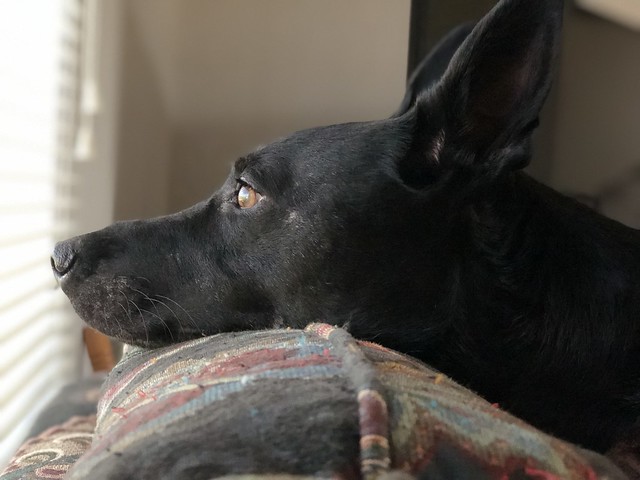
This breed developed in the 19th century as an adaptable, all-purpose farm dog for herding, guarding, and pulling small carts. It comes from the southern part of the Netherlands, especially the province of Brabant, and from neighbouring Belgium. The breed shares similar origins with the Belgian Shepherds (see pp.192–193) and German Shepherd Dog (see pp.186–189). Curiously, it has not gained the popularity of these breeds, remaining rare even in its native land and almost unknown outside it. The Dutch Shepherd Dog is one of the most competent of the shepherd breeds, excelling in trials and used as a security and police dog. As a companion it is loyal and dependable, but still playful and highly energetic, and makes a good family dog or guard dog. The breed was divided into Long-haired, Short-haired, and Wirehaired versions when showing started at the turn of the 20th century. All three coats are fairly hard and offer excellent protection against the cold.
HISTORY
Hailing from The Netherlands, as far as the 1800s, the Dutch Shepherd was used as a countryside shepherd dog, trusted with watching large flocks of stock animals. Besides their guardian role, they were also able to keep the stock away from crops. They also accompanied stock as they traveled to different meadows, markets and ports. Therefore the Dutch Shepherd is often described as indispensable jack-of-all-trades on the farm. The exact origin of the Dutch Shepherd is not known. This dog was discovered as a naturally occurring shepherd’s type of dog living in the rural areas.
Even with the prevailing industrialization later that century and the declining need for these dogs, the breed kept thriving. Today Dutch Shepherds, besides from being loving companions, are being used as police dogs, search and tracking dogs and guide dogs for the blind.
PERSONALITY
Dutch Shepherds have playful and affectionate personality. They thrive on human companionship and enjoy spending time with their families. Since they are very loyal, reliable and alert, they are good watch dogs. They can be curious and inquisitive with strangers, but at the end tend to build friendly relationships with everyone.
Dutch Shepherds are active, energetic, obedient and gifted with true shepherding talent, which makes them irreplaceable working dogs, on the field. Other breed attributes include independent, persistent, intelligent, loving and naturally friendly. Dutch Shepherds are very patient and tolerant dogs and get along well with children of all ages. If raised together the can be good friends with other dogs and non-canine pets.
TRAITS
Dutch Shepherds are muscular, powerful and well-proportioned dogs of medium size and weight. They have relaxed, but alert appearance, well-balanced structure, intelligent expression and lively temperament.
Dutch Shepherds come in three varieties: longhaired (long, flat and harsh hairs), shorthaired (quite hard and medium length hairs) and wire-haired (dense and harsh, medium length, usually curly hairs). The base coat color is golden or silver with a small amount of white on chest or toes being permitted.
The Dutch Shepherd is 21.5-24.5” (54.5-62cm) tall and weights around 50-70Ib (22.5-32kg).
HANDLING
Dutch Shepherds are extremely intelligent, independent and self-confident. Therefore, on paper they are a good training material, but require strong and experienced handler. They need to be handled with consistency, patience and commitment. Dutch Shepherds must learn their place within the family unit and accept the human as pack leader. The pack leader role must be established from the very beginning, because Dutch Shepherds have a tendency of showing dominance through growling and biting.
Destructive, negative behavior can be prevented through intense mental stimulation and exercise regimens. Socialization from an early age, is very important when raising a well behaved Dutch Shepherd. If kept in isolation, the Dutch Shepherd puppies can become fearful and shy, as they mature. Therefore they need to be exposed to many different experiences.
HEALTH
Dutch Shepherds as a breed are generally healthy and long lived. Their average lifespan is estimated to be around 12-15 years, although some dogs have exceeded this ages and lived even longer.
The are no serious physical or mental hereditary illnesses in this breed. Bearing in mind that Dutch Shepherds are large dogs, musculoskeletal conditions such as hip and elbow dysplasia have been reported, but these instances are quite low. However, it is important to know that Dutch Shepherds are very sensitive to several anesthetics and require some additional testing before inducing anesthesia protocols.
The Royal Dutch Police Dog Association (KNPV) trains Dutch Shepherd Dogs in all aspects of police dog work. The dog shown here is responding to the “Attach” command, which is actually a form of “Retrieve” training. Many police forces, including Britain’s Metropolitan Police, train police dogs to retrieve an object, often a cricket bat inside the sleeve of a coat. Police dogs graduate from retrieving this “heavy sleeve” to retrieving the sleeve of a person wearing protective clothing.