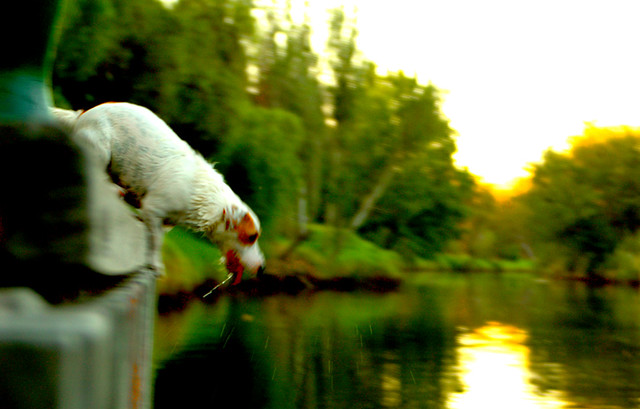
Jack Russell Terrier

Country of origin: Great Britain
Registries: JRTCA, UKC
Occupation: Hunter,
performance sports
Size: 10 to 15 in tall; 10 to
20 lbs
Longevity: 14 to 16 years
Exercise: Vigorous daily
exercise
Training: Moderate; hard to
keep challenged
Grooming: Easy
Colors: Black and white, brown and white, tricolour

Immensely popular in Britain, this breed was developed as a ratter in 19th-century Devon, England, by the Reverend John Russell, the “Sporting Parson”. It retains all of its terrier instincts, and is feisty and outgoing, generally exuberant and affectionate, but needing competent discipline to curb its more aggressive tendencies. Explorer Sir Ranulph Fiennes walked his Jack Russell to both the North and South Poles, testament to how much exercise these rugged little dogs crave. The waterproof double coat may be smooth- or wire-haired, the build is short-legged and muscular, and the long head has generally folded ears. As working dogs, Jack Russells originally had their tails cut short, a habit that persists in some breed registries. Until recently, the name “Jack Russell” was also used to describe the type now called the Parson Russell Terrier.

Advertisement

spot_img

Popular Questions

Can Dogs Eat Grass? Understanding the Safety and Reasons

As dog owners, we often find ourselves pondering our furry friends' peculiar behaviors. One such behavior is grass eating. Can dogs eat grass? Is...

Why Does My Dog Have Bad Breath? Understanding Halitosis

Bad breath, also known as halitosis, is a common issue among dogs. While it may seem like a minor concern, persistent bad breath in...

What is a Hotspot on a Dog? A Comprehensive Guide to Canine Hotspots

As dog owners, our primary concern is always the well-being of our furry companions. One common health issue that many dogs face is the...

Are Dogs Allergic to Gluten? A Comprehensive Look into Canine Nutrition

The gluten-free trend has become increasingly popular among humans as more people are diagnosed with gluten sensitivities or celiac disease. However, pet owners may...

Skin Infections in Dogs: Types, Causes, Symptoms, and Treatments

Skin infections in dogs are a common and often frustrating issue for both pets and their owners. These infections can be caused by various...

Eye Problems in Dogs: Causes, Symptoms, and Treatment Options

Eye problems in dogs are relatively common and can range from mild to severe. As a responsible dog owner, it is crucial to be...

Hair loss in dogs

Alopecia or hair loss is common to dogs and may vary from partial to complete hair loss. It may occur gradually or may happen...

Flea allergy dermatitis

Flea allergy dermatitis is an itchy skin disease that affects both dogs and cats. It is the most common skin disease found in dogs...

Cataracts in Dogs

Cataracts in dogs are characterized by a cloudiness that forms in a clear sac that contains the lens of the dog’s eye. If cataracts...

Kennel Cough in Dogs

Canine infectious tracheobronchitis or kennel cough as it is commonly known is not a serious condition which requires an immediate visit to the vet....

Patellar Luxation in Dogs: Causes, Symptoms, and Treatment Options

Patellar luxation, also known as a dislocated kneecap, is a common orthopedic issue in dogs. This condition can cause discomfort, lameness, and may even...

Cushing’s Disease in Dogs

Hyperadrenocorticism, also know as Cushing’s disease, is a disease that can be very tricky to diagnose at first since it mainly occurs in older...

Hypothyroidism in Dogs

If your dog seems sluggish, has gained weight, and doesn’t seem interested in being active, he or she may have an underactive thyroid. The thyroid...
Previous article
Next article