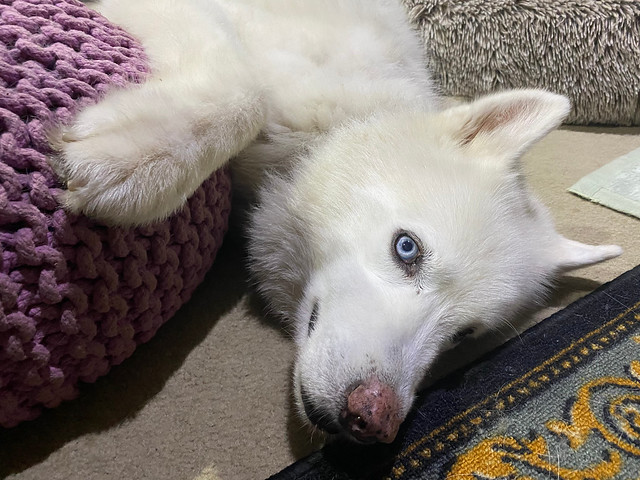
Siberian Husky

Siberian Husky

Country of origin: Russia
Registries: AKC, UKC, CKC
Occupation: Sled dog
Size: 16–27.5kg (35–60lb),
51–60cm (20–24in)
Longevity: 11 to 13 years
Exercise: Daily run
Training: Moderate to difficult
Grooming: Sheds
Colors: All colours, for both coat and eyes

Siberian or Arctic Huskies were used for centuries to pull sleds by the Chukchi and possibly the Koryak and Kamchadal peoples of Siberia. Genetically close to the wolf, they seldom bark but howl as a pack. Fur traders first brought them to Alaska in 1909, and continued for the next two decades until the Soviet Union closed the border in 1930. Siberian Huskies were used for draught work, but also excelled in racing, being smaller and lighter than other dogs then in general use. The breed’s hour of glory came in 1925, when it helped carry diphtheria serum across Alaska in record time in the “Great Race of Mercy”, saving the city of Nome from an epidemic. Ideally suited to long-distance endurance work, they are still used for sledding, as well as in the newer sports of skijoring and ski-pulka, in which they pull a skier wearing a special harness. Bred as pack animals, they need lavish amounts of company and activity, and make fine, gentle companions.

Advertisement

spot_img

Popular Questions

Can Dogs Eat Grass? Understanding the Safety and Reasons

As dog owners, we often find ourselves pondering our furry friends' peculiar behaviors. One such behavior is grass eating. Can dogs eat grass? Is...

Why Does My Dog Have Bad Breath? Understanding Halitosis

Bad breath, also known as halitosis, is a common issue among dogs. While it may seem like a minor concern, persistent bad breath in...

What is a Hotspot on a Dog? A Comprehensive Guide to Canine Hotspots

As dog owners, our primary concern is always the well-being of our furry companions. One common health issue that many dogs face is the...

Are Dogs Allergic to Gluten? A Comprehensive Look into Canine Nutrition

The gluten-free trend has become increasingly popular among humans as more people are diagnosed with gluten sensitivities or celiac disease. However, pet owners may...

Flea allergy dermatitis

Flea allergy dermatitis is an itchy skin disease that affects both dogs and cats. It is the most common skin disease found in dogs...

Cushing’s Disease in Dogs

Hyperadrenocorticism, also know as Cushing’s disease, is a disease that can be very tricky to diagnose at first since it mainly occurs in older...

Elbow Dysplasia in Dogs: Diagnosing & Treating Joint Disorder

Elbow dysplasia is a common orthopedic condition affecting dogs, particularly large breeds. It can lead to chronic pain, decreased mobility, and a reduced quality...

Hip Dysplasia in Dogs: Causes, Symptoms, and Treatment Options

Hip dysplasia is a common skeletal condition affecting dogs, especially large and giant breeds. It occurs when the hip joint doesn't develop properly, resulting...

Cancer in Dogs: Types, Symptoms, and Treatment Options

Cancer is a disease that affects not only humans but also our beloved canine companions. It is the leading cause of death in dogs...

Canine Distemper in dogs – Symptoms, Treatment, Prevention

If you are a dog owner, canine distemper should be one of your greatest fears. Canine distemper is a viral disease, which is contagious...

Rabies in dogs

Rabies is one of the most dreaded diseases encountered by a pet owner and with good reason. It is a mostly fatal viral...

Eye Problems in Dogs: Causes, Symptoms, and Treatment Options

Eye problems in dogs are relatively common and can range from mild to severe. As a responsible dog owner, it is crucial to be...

Allergies in Dogs: Causes, Symptoms, and Treatments

Allergies are a common issue affecting many dogs, causing a range of symptoms that can impact their quality of life. In this comprehensive guide,...
Previous article
Next article