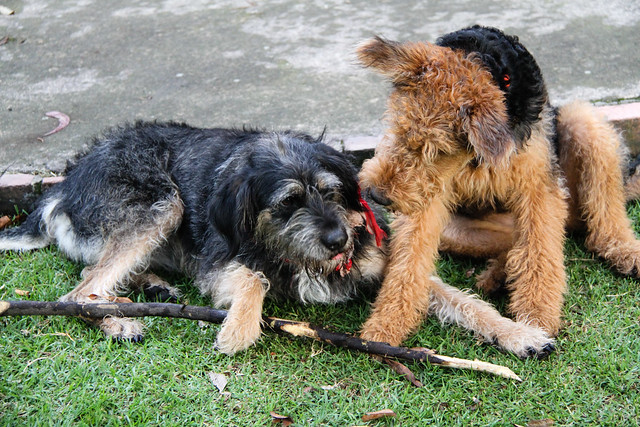
Welsh Terrier

Country of origin: Wales
Registries: AKC, UKC, CKC
Breed Group: AKC: Terrier Group,
FCI: Group 3 Section 1 #78
Occupation: Vermin hunter
Size: 9–10kg (20–22lb),
35–39cm (14–15in)
Longevity: 13 to 15 years
Exercise: Moderate
Training: Moderate
Grooming: Moderate to
difficult
Colors: Black and tan

This breed dates back to the 1760s and originated in North Wales as a ratter. Today, it is more often seen in North America and is kept as a companion, although it still makes a good vermin hunter and guard dog. Probably descended from the now- extinct Old English Broken (or Coarse-haired) Black-and-tan Terrier, it is a strong, healthy breed, and needs plenty of activity. Coming from a working background, the Welsh Terrier isn’t particularly difficult to train, but it doesn’t back down from dog fights. The coat is fairly easy to care for except for the beard, which can become messy and needs regular attention.

Advertisement

spot_img

Popular Questions

Can Dogs Eat Grass? Understanding the Safety and Reasons

As dog owners, we often find ourselves pondering our furry friends' peculiar behaviors. One such behavior is grass eating. Can dogs eat grass? Is...

Why Does My Dog Have Bad Breath? Understanding Halitosis

Bad breath, also known as halitosis, is a common issue among dogs. While it may seem like a minor concern, persistent bad breath in...

What is a Hotspot on a Dog? A Comprehensive Guide to Canine Hotspots

As dog owners, our primary concern is always the well-being of our furry companions. One common health issue that many dogs face is the...

Are Dogs Allergic to Gluten? A Comprehensive Look into Canine Nutrition

The gluten-free trend has become increasingly popular among humans as more people are diagnosed with gluten sensitivities or celiac disease. However, pet owners may...

Elbow Dysplasia in Dogs: Diagnosing & Treating Joint Disorder

Elbow dysplasia is a common orthopedic condition affecting dogs, particularly large breeds. It can lead to chronic pain, decreased mobility, and a reduced quality...

Skin Infections in Dogs: Types, Causes, Symptoms, and Treatments

Skin infections in dogs are a common and often frustrating issue for both pets and their owners. These infections can be caused by various...

Poisoning in dogs

Dogs by nature are inquisitive and curious. A great habit it is, when you are taking your dog out to walk. However, it works...

Brachycephalic Breeds

Brachycephalic dogs are those affected by brachycephalic respiratory syndrome. In Greek, “brachy” means “shortened” and “cephalic” means “head”. The shortened head of a dog...

Fever in dogs

Fever also known as pyrexia is defined as a higher than a normal body temperature. This normal body temperature is common to all animals...

Dental Issues in Dogs: Causes, Symptoms, and Treatments

Dental issues are common in dogs and can lead to a variety of health problems if left untreated. In this comprehensive guide, we will...

Hypothyroidism in Dogs

If your dog seems sluggish, has gained weight, and doesn’t seem interested in being active, he or she may have an underactive thyroid. The thyroid...

Cancer in Dogs: Types, Symptoms, and Treatment Options

Cancer is a disease that affects not only humans but also our beloved canine companions. It is the leading cause of death in dogs...

Bloat (gastric torsion) in Dogs – Symptoms, Treatment, Prevention

Bloat, also referred to as gastric dilation volvulus (GDV) and gastric torsion, is a condition in which a dog’s stomach becomes distended, twists, or...