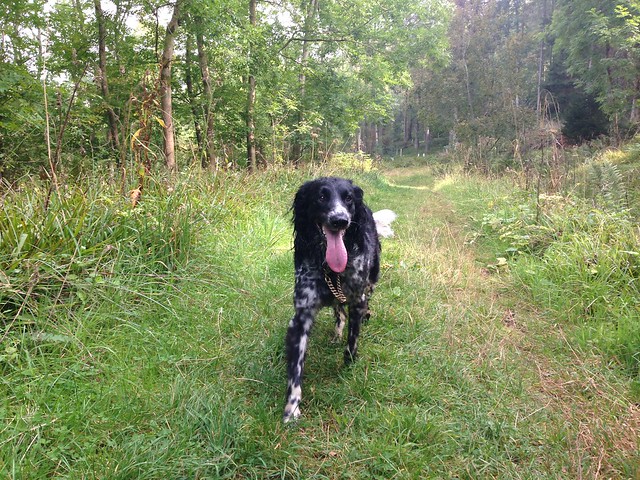
Large Munsterlander

Country of origin: Germany
Registries: UKC
Occupation: Hunter
Size: 23 to 26 in tall; 53 to
76 lbs
Longevity: 10 to 12 years
Exercise: Vigorous daily
exercise
Training: Needs a job or
purpose
Grooming: Easy to moderate
Colors: Black and white

Biddable but sometimes opinionated, the Large Münsterländer exists for what was originally an aesthetic reason. German Long-haired Pointers once produced both liver-and-white and blackand- white pups. When that Pointer’s breed standard was re-written to accept only variations of liver and white, some breeders in the Münster region of Germany set up their own club to perpetuate blackand- white coloured dogs. It has a typical pointer personality – occasionally a little intense and serious but capable of spirited humour as well – and it is an increasingly popular breed outside Germany, especially in Britain. Somewhat confusingly, despite the breed’s name it is not related to the Small Münsterländer.

Advertisement

spot_img

Popular Questions

Can Dogs Eat Grass? Understanding the Safety and Reasons

As dog owners, we often find ourselves pondering our furry friends' peculiar behaviors. One such behavior is grass eating. Can dogs eat grass? Is...

Why Does My Dog Have Bad Breath? Understanding Halitosis

Bad breath, also known as halitosis, is a common issue among dogs. While it may seem like a minor concern, persistent bad breath in...

What is a Hotspot on a Dog? A Comprehensive Guide to Canine Hotspots

As dog owners, our primary concern is always the well-being of our furry companions. One common health issue that many dogs face is the...

Are Dogs Allergic to Gluten? A Comprehensive Look into Canine Nutrition

The gluten-free trend has become increasingly popular among humans as more people are diagnosed with gluten sensitivities or celiac disease. However, pet owners may...

Hypothyroidism in Dogs

If your dog seems sluggish, has gained weight, and doesn’t seem interested in being active, he or she may have an underactive thyroid. The thyroid...

Elbow Dysplasia in Dogs: Diagnosing & Treating Joint Disorder

Elbow dysplasia is a common orthopedic condition affecting dogs, particularly large breeds. It can lead to chronic pain, decreased mobility, and a reduced quality...

Autoimmune Disorders in Dogs: Causes, Symptoms, & Treatment

Autoimmune disorders are a group of conditions in which the immune system mistakenly attacks the body's own cells and tissues. These disorders can affect...

Brachycephalic Breeds

Brachycephalic dogs are those affected by brachycephalic respiratory syndrome. In Greek, “brachy” means “shortened” and “cephalic” means “head”. The shortened head of a dog...

Poisoning in dogs

Dogs by nature are inquisitive and curious. A great habit it is, when you are taking your dog out to walk. However, it works...

Developmental Growth Disorders in Puppies

If your puppy is of a large or giant breed (those breeds that would weigh 55 pounds or more when fully grown), you should...

Canine Distemper in dogs – Symptoms, Treatment, Prevention

If you are a dog owner, canine distemper should be one of your greatest fears. Canine distemper is a viral disease, which is contagious...

Cushing’s Disease in Dogs

Hyperadrenocorticism, also know as Cushing’s disease, is a disease that can be very tricky to diagnose at first since it mainly occurs in older...

Dental Issues in Dogs: Causes, Symptoms, and Treatments

Dental issues are common in dogs and can lead to a variety of health problems if left untreated. In this comprehensive guide, we will...
Previous article
Next article