| Country of Origin: | Canada and the United States |
| Registries: | WGSDCV, FCI, UKC, NKC, AWSA, APRI, WSSDCA, DRA |
| Breed Group: | AWSA and UKC: White Shepherd, FCI: Berger Blanc Swiss in 2002 |
| Occupation: | Herding, versatile working dogs, family companion |
| Size: | Height: 60 – 65 cm (24 – 26 inches) Weight: 35 – 40 kg (77 – 85 lbs) |
| Longevity; | 12-14 years |
| Exercise: | a daily, brisk, long walk, jog or run |
| Training: | sport activities, tracking, obedience, agility, flyball and ring sport |
| Grooming: | Average |
| Colors: | White |






During the early 20th century, the recessive white gene for white hair in German Shepherd dogs was introduced into a breeding program in order to create a new dog breed. The first white Shepherd was named Greif.
Only in 1969, white shepherd fanciers in the US and Canada formed a special White German Shepherd breed club. This dog breed is a direct descendant of the German Shepherd dog.
White German Shepherd dogs are not albino, as long as they have a dark pigment of the skin, nose, eyelids and nails and pads on their paws. White German shepherd dogs are in no way different from the other colors of German Shepherds.
There are several variations of White German Shepherds . To obtain white puppies it is necessary that both parents have the recessive white gene, while not mandatory that the parents have to be white. So from any color can arise a white German shepherd if one of the parents has a corresponding gene. The gene that occurs in white of German Shepherd is absolutely different from the gene that causes the appearance of the albino specimens.
The reason for the smaller popularity of white German shepherd lies in the fact that people do not want to buy them because they think they are albino. White German shepherd dogs, during the history, used to be disqualified from competitions because it was thought that they were albino.
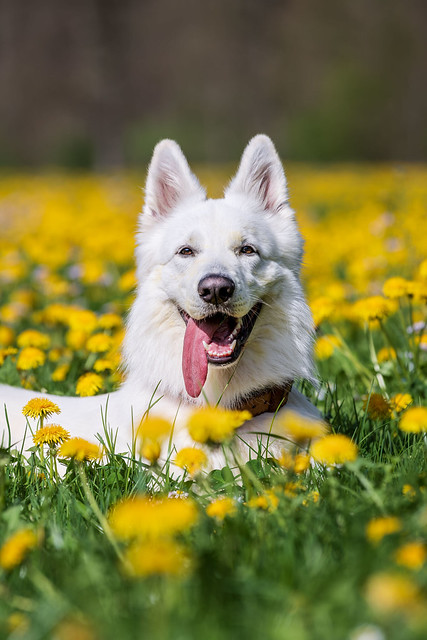
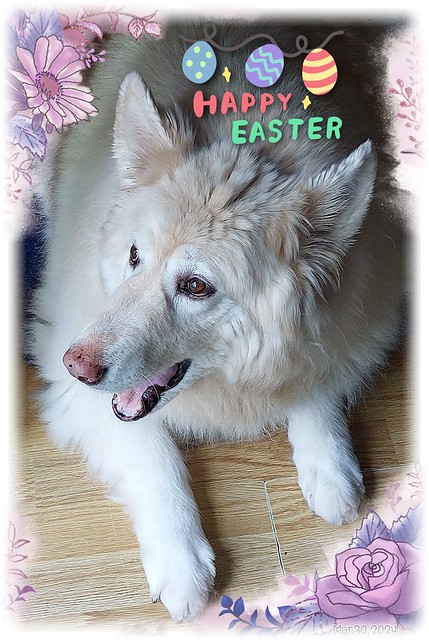
White Shepherds are medium sized dogs, muscular and well balanced. They are slightly longer than tall; they have a medium length white coat, low set tail and erect ears. Their muzzle and skull are of equal length. This dog breed is an all around working dog.
The coat of White Shepherds is weather resistant, straight and dense and close lying. Their undercoat is fine in texture, thick and short. Around the neck, the coat is heavier and longer.
This dog breed is self confident, eager and alert. These dogs have both protective and herding instincts. They are friendly and open, observant with strangers. They like to run, fetch and are very easy to train and work with. Since these dogs are very playful, they are great companions even for families with children.