| Country of origin: | France |
| Registries: | AKC, UKC |
| Occupation: | Herder |
| Size: | 24.5 to 27.5 in tall; 80 to 110 lbs |
| Longevity: | 11 to 13 years |
| Exercise: | Very active |
| Training: | Easy; hard to keep challenged |
| Grooming: | Easy |


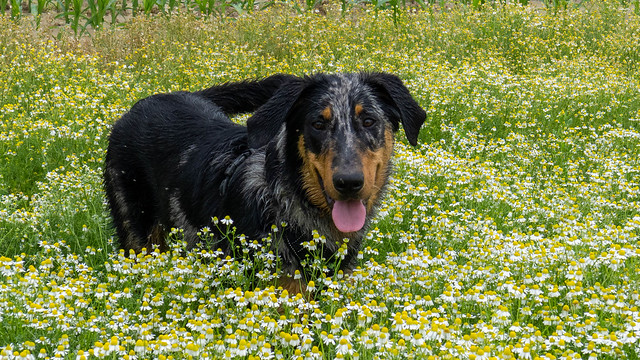


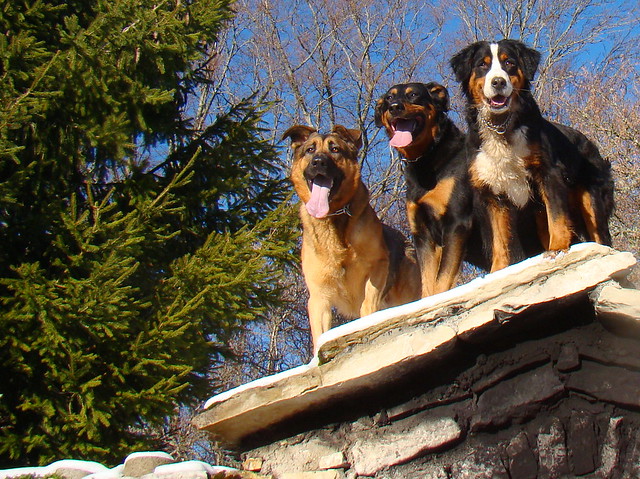
Also from Brie, and with double dewclaws like its different-coated but genetically close relative the Briard, this physically imposing, powerful, and agile dog is now found throughout northern France. With a history of hunting and boar herding, today it is kept as a companion and guard. A reliable working dog, the Beauceron is also increasingly popular on the European show circuit. Because of its imposing size, first meetings with other dogs should be carried out under supervision.
History
As its name depicts, the Beauceron is a French breed that originates in France. However, they are not confined to only the specified region in France as its namesake states. They were found running all the lands of France. They were great herding dogs at the time. This can be attributed to the fact that they are a wolf type dog.
It is believed that these dogs date back to the 1500s when an ancient manuscript surfaced. Then again they were mentioned in the 1800s, unofficially as the Beauceron. Instead of manuscripts, a man named Abbe Rozier wrote about what they believed to be the Beauceron. Eventually in 1893, two men, Abbe Rozier and M. Emmanuel Ball helped create the standard of the breed and a club surfaced shortly after in 1922.
In today’s time, the AKC accepted the Beauceron as a breed in 2007.
Personality
Since Beaucerons are utilized as herd dogs and guard dogs, they are protective dogs. They are very loyal to their loved ones but tend to be hesitant with strangers. They are athletic and very energetic so they have the ability to keep up and love to play. Their energy levels are very high so it only makes sense. Their obedience and alertness contributes to the duties of a guard dog. They are very gentle creatures though, so they are great with families also.
Traits
These large dogs are all muscle, weighing anywhere from 66 lbs to 100 lbs. They stand tall and strong at 24 to 27.5 inches. They were utilized in the development of Doberman Pinschers, so they just look like bigger versions of the Doberman dogs.
Their hard coat can come in a couple of various colors. These colors include black, tan, and gray. Their markings include red stockings on their legs and tiny dots on top of their eyes. Black and tan or black, tan, and gray are the only acceptable color combinations by the breed standard.
Handling
The Beauceron is typically an intelligent dog that is easy to train due to its temperament. They are eager to learn so they will learn quickly if you are persistent and provide them with adequate exercise. These dogs need a large area to run around and expend all of their energy. They will need to stay busy or else they become bored and will destroy things to stay entertained. Stimulation is important and they will need to be exposed to new places.
Grooming is not a full-time job because their overcoat is meant to protect them, therefore they do not shed regularly. Instead, they shed twice a year and will require more grooming these two times. Otherwise, it is not an extensive maintenance which makes it easier to own one as a companion.
Health
Beaucerons are well-rounded canines as far as health goes. They do not have extensive health issues and are considered to be a healthy breed. They can be prone to typical dog issues like hip dysplasia. In all, they have a lifespan of 10 to 12 years.