| Country of Origin: | Italy |
| Registries: | LCA, FCI, ENCI, AKC/FSS, NKC, CKC, ACR, APRI (has opened registration as rare breed), DRA, NAPR |
| Breed Group: | FCI : Group 8 Section 3 #298, AKC :FSS, ANKC : Group 3 Gundogs, KC (UK): Gundogs, NZKC : Gundogs, UKC : Gun Dog |
| Occupation: | Sports dog, gundog, water retriever |
| Size: | Height: 41–48 cm (16–19 inches) Weight: 11–16 kg (24-35 lbs) |
| Longevity; | 16 or more years |
| Exercise: | Daily long walk, swim. |
| Training: | Socialize, Tracking, games (Searching) |
| Grooming: | Average |
| Colors: | Brown & White, Orange & White, Off-White, Brown Roan, Brown, Orange |


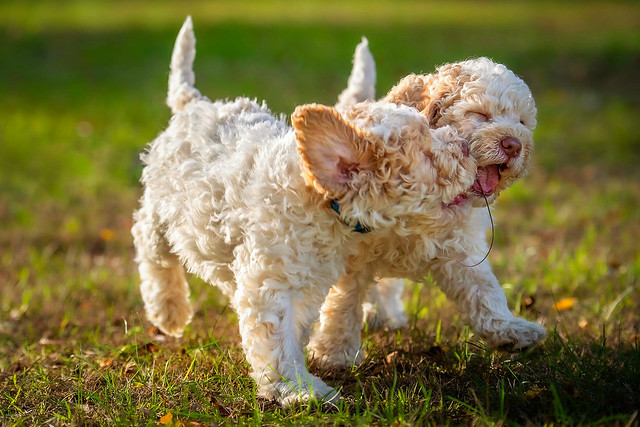

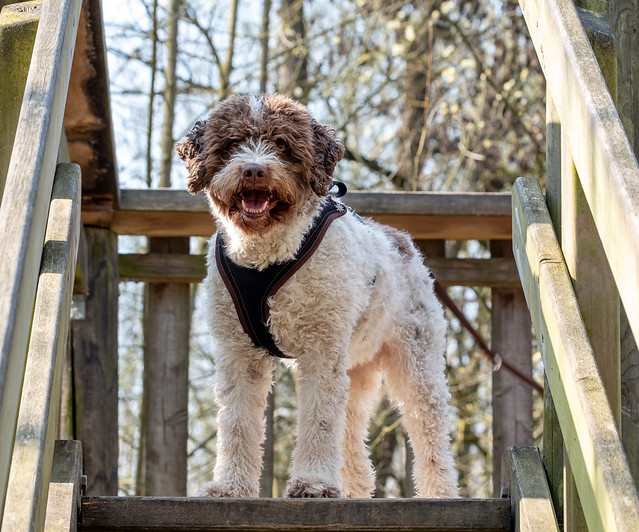


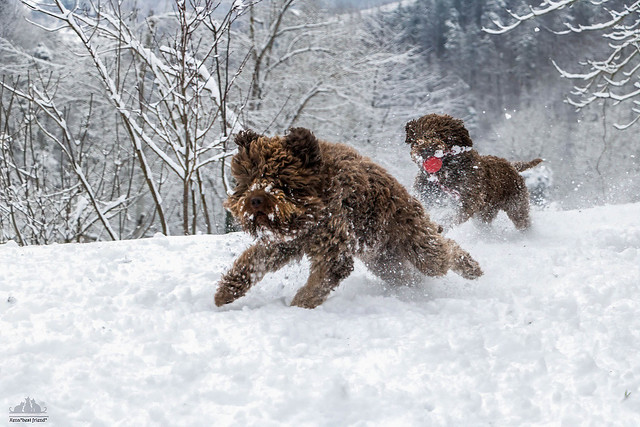
This is an ancient breed of water retriever. It comes from the lowlands of Romagna sub region in Italy. It is believed that all today’s modern water retrievers descended from the Lagotto Romagnolo dog breed.
The name Lagotto Romagnolo means – lake dog from Romagna. Even though this is a hunt dog and gundog, it is lately used more and more to hunt for truffles.
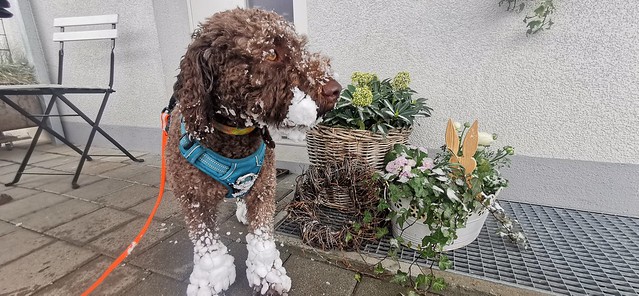
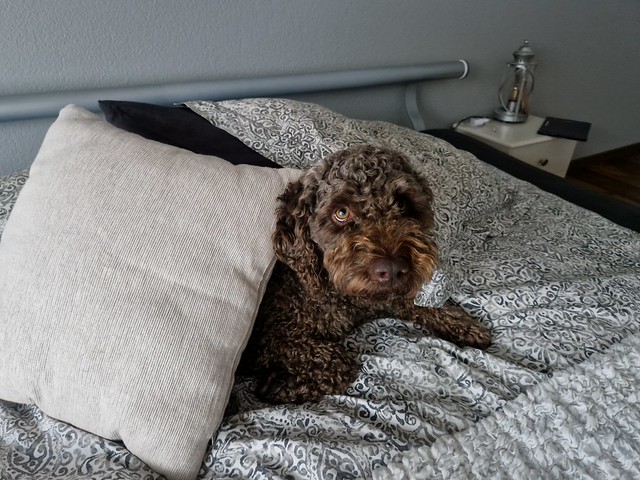
This dog breed has round eyes in yellow to dark brown color. They have a waterproof coat that is wooly, curly and thick. The color of the fur can be brown, white or off-white. The Lagotto Romagnolo dog is a medium sized dog. Males can grow up to 19 inches and can weigh up to 35 lbs. Females can grow up to 18 inches and can weigh around 32 lbs.
Lagotto Romagnolo dogs are working dogs. They have sharp senses. Also, this dog breed is very loyal and very loving. They are intelligent and can easily be trained. They are very sociable with other pets in the household. Lagotto Romagnolo dogs require certain exercise as they have a natural instinct for retrieving.
Nowadays the Lagotto Romagnolo dogs are trained primarily for searching truffles and not for hunting.what makes them excellent search dog is their highly developed nose. These dogs are also very good swimmers, therefore they are very good in retrieving from lakes or other waters.
Lagotto Romagnolo dogs like to dig. They have digging urges and because of this they should be provided with a sandbox or other designated area to satisfy their need for digging. Once again, this is one more reason why they are being used and trained for digging truffles.
When it comes to keeping up their hygiene, there are divided opinions. For example, some enthusiasts of Lagotto Romagnolo believe that they should be brushed regularly while others believe that their fur should be left grow naturally. Either way, their coat gets matted very easily and because of this it should be pulled apart without tearing the fur.
When cutting their hair to up to 1 ½ inches of length, it will be much easier to maintain their neat look. Also, the hair from ear canal should be regularly plucked as well as the hair around the eyes.